Faith • Remembrance • Community

Religious events

Islamic celebrations and days of remembrance hold an important place in the lives of many Iranian communities. Through prayers, family gatherings, charity, and religious ceremonies, these occasions bring people together and reflect values such as faith, generosity, justice, and devotion.

Discover Islamic Traditions

Explore five important Islamic celebrations and days of remembrance, each with its own religious meaning, customs, and place in community life.

A religious celebration associated with Eid al-Ghadir
02 · Shia Islamic Tradition

Eid al-Ghadir

عید غدیر

Definition: Eid al-Ghadir is an important celebration in Shia Islam that commemorates the event of Ghadir Khumm.

Explanation: According to Shia belief, the Prophet Muhammad publicly designated Ali ibn Abi Talib as his successor at Ghadir Khumm. The occasion is celebrated through religious gatherings, prayers, sharing food, and exchanging congratulations. It holds particular significance because of its connection to leadership and the religious identity of Shia Muslims.

A religious gathering commemorating Tasua
03 · Muharram

Tasua

تاسوعا

Definition: Tasua is the ninth day of Muharram, the first month of the Islamic lunar calendar, and the day before Ashura.

Explanation: Tasua is an important day of remembrance for Shia Muslims. It is associated with the events leading up to the Battle of Karbala in 680 CE and is often dedicated to remembering Abbas ibn Ali and the loyalty of those who stood with Imam Hussein. Observances commonly include religious gatherings, mourning ceremonies, and prayers.

A religious procession commemorating Ashura
04 · Remembrance and Justice

Ashura

عاشورا

Definition: Ashura is the tenth day of Muharram. For Shia Muslims, it commemorates the martyrdom of Imam Hussein, the grandson of the Prophet Muhammad, at the Battle of Karbala in 680 CE.

Explanation: Ashura is a day of mourning and reflection for Shia communities. People may attend religious gatherings, listen to accounts of the Battle of Karbala, and participate in processions. The event is remembered for its themes of courage, justice, loyalty, and resistance to oppression. Ashura also has religious significance for Sunni Muslims, although its observances and interpretations differ.

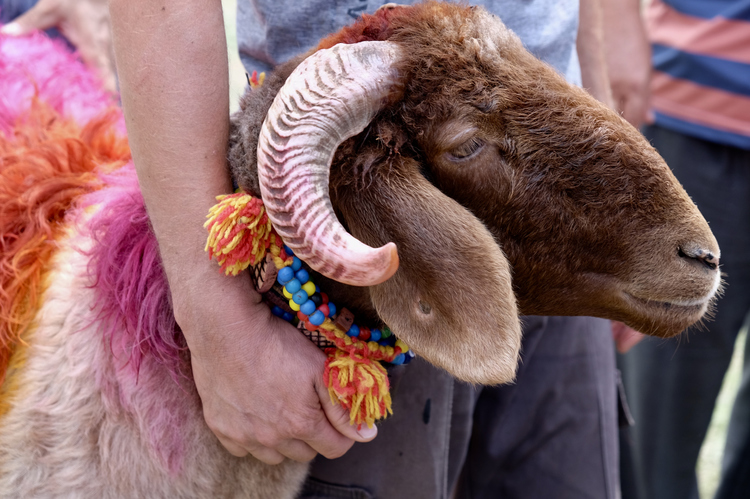
A sheep associated with Eid al-Adha and the Festival of Sacrifice
05 · Festival of Sacrifice

Eid al-Adha

عید قربان

Definition: Eid al-Adha, also called the Festival of Sacrifice, is an Islamic festival associated with Prophet Ibrahim's devotion and willingness to obey God.

Explanation: The festival takes place during the annual Hajj pilgrimage to Mecca. Muslims mark the occasion through special prayers, sharing meals, and giving to people in need. Where an animal sacrifice is performed according to religious practice, the meat is traditionally shared with family, friends, and people experiencing hardship. The festival emphasizes faith, generosity, and caring for others.