Traditions • Community • Heritage

Important Cultural Events

Persian culture is a rich collection of traditions, celebrations, art, and customs passed down through generations. These events connect people to their history, bring families and communities together, and help preserve Iran's cultural identity. By learning about these celebrations, we can better understand the values and traditions that make Persian heritage unique.

Discover Persian Traditions

Explore five traditional celebrations that reflect the history, seasonal changes, and community spirit of Iran.

People celebrating Chaharshanbe Suri around fire
02 · Before Nowruz

Chaharshanbe Suri

Definition: Chaharshanbe Suri is a traditional Iranian festival celebrated on the eve of the last Wednesday before Nowruz.

Fire is an important symbol of the celebration. In a well-known custom, people jump over small fires while expressing hopes to leave behind sickness and sadness and welcome energy and happiness for the new year. Communities may also gather, share food, and enjoy music.

Families spending Sizdah Bedar outdoors in nature
03 · Thirteenth Day

Sizdah Bedar

Definition: Sizdah Bedar is a Persian tradition celebrated on the thirteenth day of Farvardin, the first month of the Iranian calendar, near the end of the Nowruz holidays.

Families and friends usually spend the day outdoors in parks, gardens, or the countryside, sharing meals and enjoying nature. The day highlights togetherness, relaxation, and the importance of the natural world. Some families also place the sabzeh from their Haft-Seen table in flowing water as part of the custom.

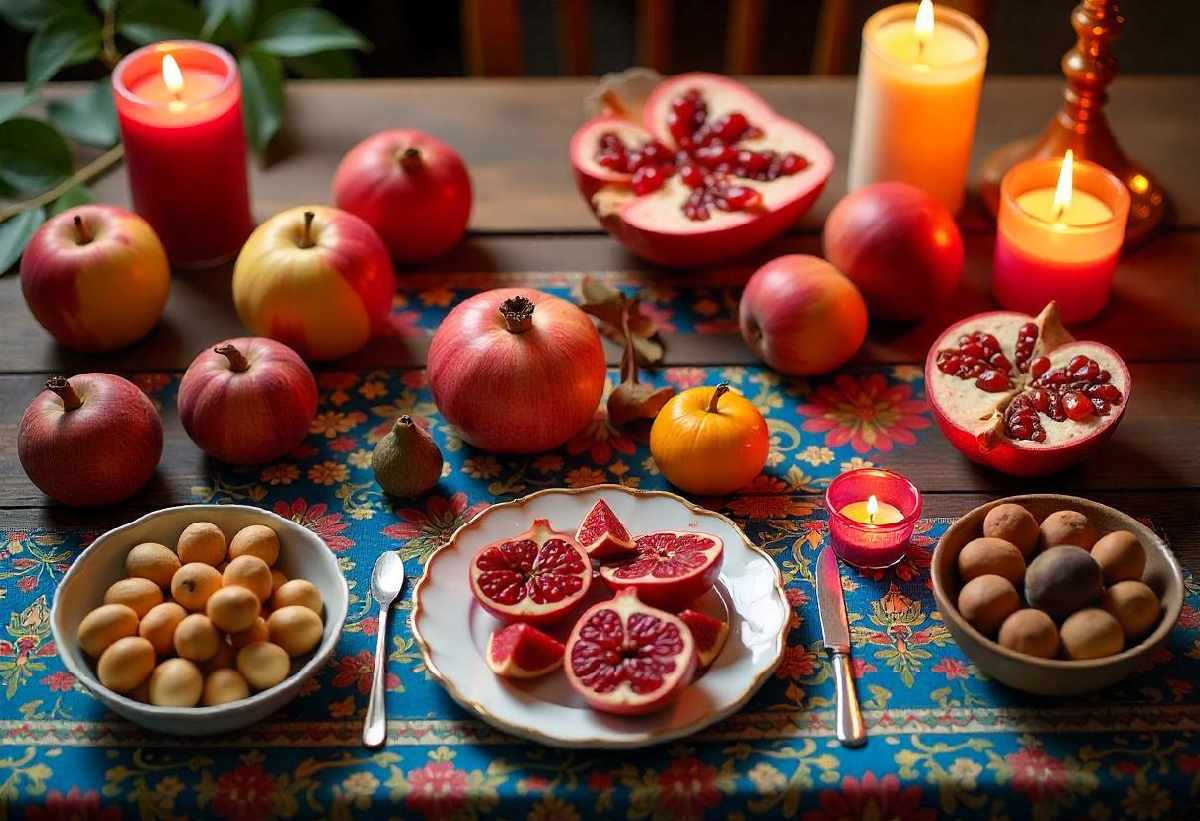
A decorated table for Shab-e Yalda with fruit and candles
04 · Winter Solstice

Shab-e Yalda

Definition: Shab-e Yalda, also called Yalda Night, is a celebration held on the longest night of the year in the Northern Hemisphere.

Families and friends gather late into the night, often eating pomegranates and watermelon, reading poetry by Hafez, and sharing stories. As the night marks the turning point toward longer days, Yalda is associated with light, hope, warmth, and the strength of family bonds.

A traditional Sadeh celebration with a large communal fire
05 · Fire and Light

Sadeh

Definition: Sadeh is an ancient Iranian midwinter festival traditionally celebrated about fifty days before Nowruz.

Its best-known custom is lighting a large communal fire. The gathering celebrates warmth and light during winter and reflects the historical importance of fire in Iranian traditions. Today, Sadeh is observed by some communities, including Zoroastrians, as a way to honour cultural heritage and bring people together.